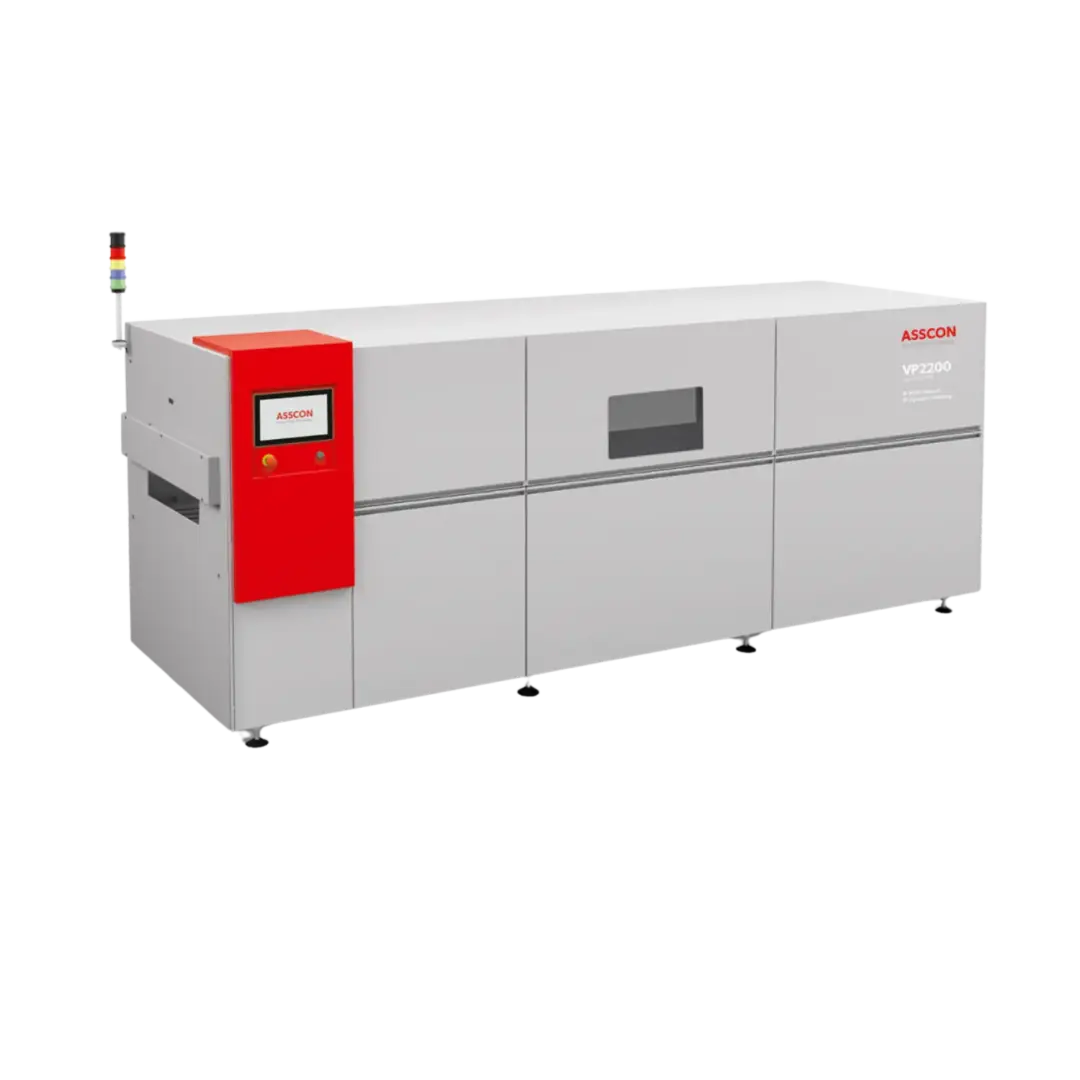
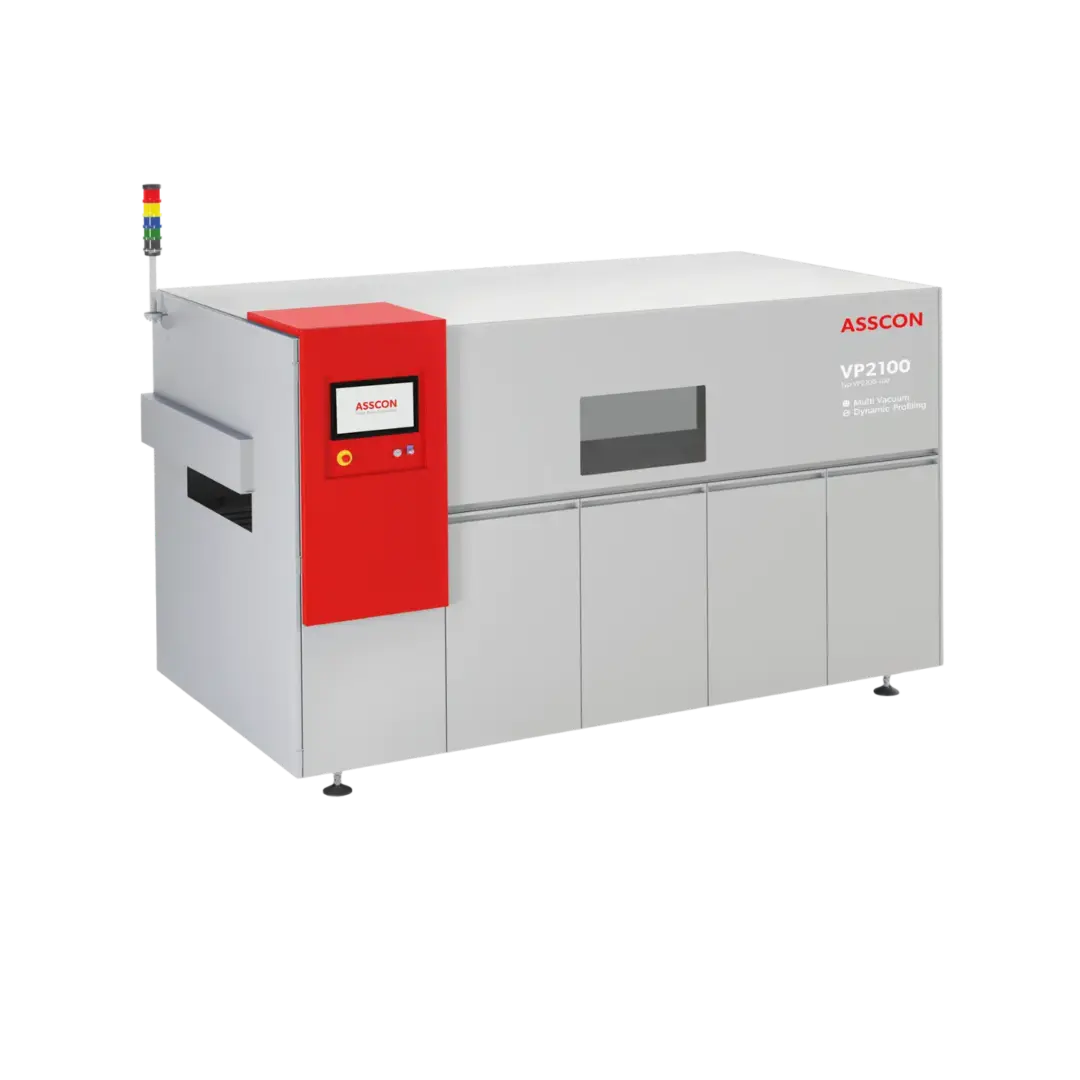
Vapor phase soldering heats PCB assemblies through the condensation of a heat-transfer fluid. The selected medium’s boiling point establishes the process temperature, making this method useful for assemblies whose components and board structures absorb heat at different rates.
Heat transfer takes place as vapor condenses on the cooler assembly. This can help heat large thermal masses and densely populated boards more uniformly. The fluid, solder alloy and component temperature limits must be compatible, and the process still needs a validated profile for the particular assembly.
Batch handling, board dimensions and cycle time are important when comparing vapor phase equipment. Some configurations include vacuum processing to address solder joint voiding, but this capability should be confirmed for the selected system. Fluid management, maintenance and the production environment also affect operating requirements.
At Sinerji, you can explore vapor phase soldering systems for PCB assembly. Contact our team to evaluate the available process options against your board design and soldering requirements.
Inline systems are designed for the integration into high-volume production lines for fully automated processing of assemblies without workpiece carriers. Electrically width-adjustable transport systems as well as center support enable fast and uncomplicated product changeover. Optimum flexibility combined with maximum throughput.

 English
  Türkçe