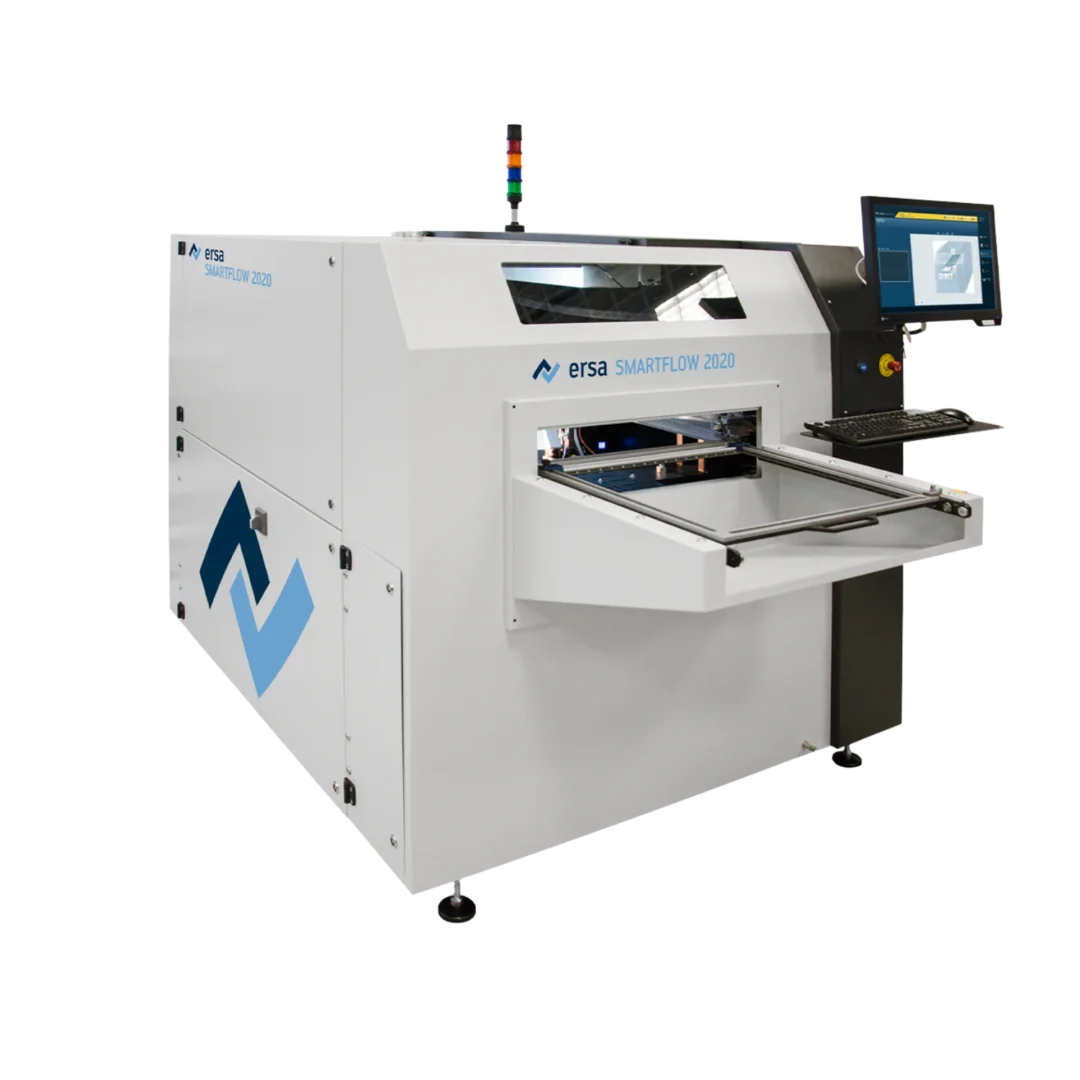
Selective soldering applies molten solder to defined locations on a PCB, typically to form through-hole connections on mixed-technology assemblies. Programmed local soldering helps avoid areas that should not be exposed to a full solder wave.
A typical process combines selective fluxing, preheating and controlled solder contact. Nozzle size and access are important because nearby components can restrict the path to a joint. Board support and positioning help maintain the intended relationship between the assembly and soldering tool.
Evaluate the number and arrangement of joints as well as the required output. A system’s nominal speed does not account for every movement, dwell or heating step. Product changeovers, nozzle maintenance and flux handling affect daily operation. Process development should use representative boards and verify the resulting joints against the assembly requirements.
Find selective soldering systems at Sinerji. Our team can help you assess suitable equipment for localized through-hole soldering and mixed-technology PCB production.

 English
 Türkçe